
Key takeaways
- Flatness should be specified in the purchase order before production, not checked only at delivery.
- State the tolerance, measurement method, reference conditions and acceptance criteria in writing.
- Tie the flatness requirement to the stage that matters, such as as-supplied or after processing.
- Agree inspection, documentation and handling requirements to protect flatness through transport.
What Flatness Means for Large Metal Plate Orders
Flatness is the maximum deviation of a plate surface from a reference plane over a defined area. When ordering large metal plates, flatness is a specification to agree before production, not a quality check to leave until delivery. The practical answer is to define the flatness requirement in the purchase order, state the measurement method and acceptance criteria, and confirm that the supplier can inspect and document the result.
Large plates behave differently from small cut pieces. Handling, lifting, storage and transport can all introduce or reveal deviation, so the agreed requirement should cover the plate as supplied and inspected, under stated conditions. If the plate will be cut, machined or welded later, the flatness needed at that stage may differ from the flatness needed on receipt.
This guide sets out the objects, conditions and trade-offs involved: what to specify, how to describe it, what to check before ordering, and how to handle inspection and transport. It does not assume a particular alloy, thickness or process, because the right requirement depends on the plate and its end use.
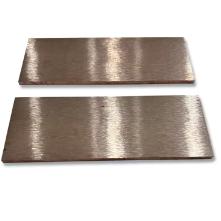
Define the Flatness Requirement Before Requesting a Quote
A flatness requirement should state four things: the plate dimensions and thickness, the tolerance value, the measurement basis, and the acceptance method. Without these, a supplier can only quote to a general commercial standard, and the buyer has little basis for comparison or rejection.
Express the tolerance value as a maximum deviation over a stated length or over the whole plate, rather than as a vague description such as 'flat' or 'straight'. The measurement basis should say whether the plate is measured as supplied, after stress relief, or after a specified process. The acceptance method should say who inspects, with what equipment, and what record is provided.
Where the end use is sensitive to deviation, it is reasonable to ask the supplier to confirm in writing that the requirement can be met before the order is placed. If the supplier cannot confirm, that is useful information for the buyer rather than a detail to resolve after delivery.
Choose the Measurement Method and State It in the Order
Flatness can be assessed in more than one way, and different methods can produce different results on the same plate. Common approaches include placing the plate on a reference surface and measuring gaps, using a straightedge and feeler gauge across defined directions, or using a coordinate measuring system for a full-surface map.
The order should name the method, the reference conditions, and the points or grid at which measurements are taken. It should also state whether the plate is supported in a particular way during measurement, because support conditions affect how a large plate sits and therefore what deviation is recorded.
If the buyer does not have a preferred method, the practical step is to ask the supplier to propose one and to describe it in the quotation. The buyer can then confirm that the proposed method matches the intended use. A method that is not written down is difficult to audit later.

Account for Material, Thickness and Process Effects
Flatness is influenced by the material, the thickness, and the processes the plate has been through. Thinner plates are generally more flexible and more sensitive to handling and support, while thicker plates may carry residual stress from rolling or thermal treatment. Cutting, machining and welding can release or introduce stress and change the flatness of the finished part.
For this reason, the flatness requirement should be tied to the stage at which it matters. A plate that is flat as supplied may not remain flat after cutting, and a plate that is flat after stress relief may need different handling to stay that way. The buyer should state whether the requirement applies to the plate as delivered or to the part after processing.
Where the end use requires flatness after machining or welding, it is worth discussing with the supplier whether additional process steps are needed and how they affect the order. This is a planning question, not a guarantee, and the answer depends on the specific plate and process.
Agree Inspection, Documentation and Acceptance Criteria
Inspection arrangements should be agreed before production. The order should state whether the supplier inspects the plate, whether the buyer or a third party inspects it, and at what point inspection takes place. It should also state what record is provided, such as a measurement report with the method and results.
Acceptance criteria should be written so that both parties interpret them the same way. This means stating the tolerance, the measurement method, the conditions, and what happens if a result falls outside the agreed value. A clear acceptance clause reduces the risk of a dispute that is really about different measurement assumptions.
If the buyer intends to inspect on receipt, the order should say so and describe the conditions under which that inspection will be carried out. Inspection after delivery is most useful when the plate is still supported and handled in the agreed way, because otherwise the measurement may reflect transport or storage rather than the supplied condition.

Plan Handling, Packaging and Transport to Protect Flatness
Flatness can be affected after the plate leaves the supplier. Lifting points, stacking, support spacing, and the duration and conditions of transport all matter for large plates. The order should therefore include handling and packaging requirements that are consistent with the flatness requirement.
Practical measures include agreeing lifting and support arrangements, avoiding unsupported overhang, and specifying packaging that keeps the plate supported during transport. The buyer should also plan how the plate will be unloaded and stored on arrival, because poor storage can undo good work at the supplier.
These points are not a substitute for a flatness specification, but they protect it. A plate that meets the requirement at inspection can still arrive out of tolerance if handling and transport are left to chance.
A Practical Ordering Checklist
Before placing an order for large metal plates, confirm the following: the plate dimensions and thickness; the flatness tolerance and the area over which it applies; the measurement method and reference conditions; the stage at which the requirement applies; the inspection arrangements and documentation; and the handling, packaging and transport requirements.
It is also useful to confirm the communication route for any deviation found at inspection, and to agree in advance how a non-conforming result will be handled. These steps do not remove the need for judgement about the specific plate and its use, but they make the requirement clear enough to quote, inspect and accept.
Where information is missing, the practical next step is to ask the supplier to confirm the point in writing before the order is placed. A short written confirmation is more useful than an assumption that is discovered to be wrong after delivery.

Frequently asked questions
Can flatness be guaranteed for large metal plates?
Flatness can be specified and inspected against agreed criteria, but it depends on the plate, the process and the measurement method. The practical approach is to agree the requirement, method and acceptance criteria in writing before ordering.
Should flatness be measured before or after cutting?
It depends on the end use. State in the order whether the requirement applies to the plate as supplied or to the part after processing, because cutting and machining can change flatness.
What should be included in a flatness specification?
Include the plate dimensions and thickness, the tolerance value and the area it applies to, the measurement method and reference conditions, the inspection arrangements, and the documentation provided.
Metal Plates 4u is a large enterprise focusing on the research, development, production and sales of copper products. With multiple production bases and R&D centers, its copper products sell well in domestic and foreign markets and are well received by customers.
Complete variety, excellent quality, innovative research and development. Customized services and professional consultation are available. If you need metal clad products, please feel free to contact us.