
Key takeaways
- Coastal corrosion is driven mainly by airborne chloride and moisture, so prevention must address both.
- Material selection sets the baseline resistance of a metal plate before any coating is applied.
- Design details such as drainage, ventilation and avoiding dissimilar metal contact reduce corrosion risk.
- Coating systems rely on correct surface preparation and suitable primers and topcoats.
- Inspection, cleaning and timely touch-up are ongoing requirements, not one-off tasks.
Why Coastal Environments Attack Metal Plates
Preventing corrosion on metal plates in coastal environments starts with understanding what makes those environments different from inland ones. The main driver is airborne chloride, carried inland as salt spray and deposited on exposed surfaces. Chloride ions disrupt the passive oxide films that normally protect metals such as stainless steel and aluminium, and they accelerate electrochemical reactions once moisture is present. As a result, a plate that performs acceptably inland can show pitting, staining or rust far sooner near the sea.
Three conditions usually need to be present together for coastal corrosion to progress: a corrodible metal surface, an electrolyte (usually a thin film of moisture or condensation), and an oxidising agent such as oxygen. Coastal air supplies the chloride and often the moisture; the metal plate supplies the rest. Prevention is therefore rarely about a single product. It is about interrupting one or more of those conditions for the whole service life of the plate.
Distance from the shoreline, prevailing wind, rainfall, humidity, temperature cycling and the presence of industrial pollutants all change how aggressive a given site is. A plate on a sea-facing balcony and a plate inside a sheltered coastal warehouse are not exposed to the same risk. Any prevention plan should therefore begin with a realistic assessment of the specific location rather than a generic coastal label.
The practical implication is that prevention is a layered decision: choose a suitable plate material, design the installation so water drains and dissimilar metals are separated, apply and maintain a protective system, and inspect periodically. Each layer reduces the load on the others.
Selecting a Corrosion-Resistant Metal Plate
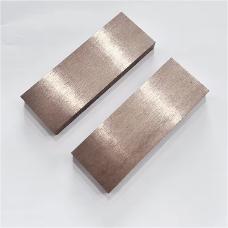
Material selection is the first and often the most cost-effective prevention step, because it determines the baseline resistance of the plate before any coating is applied. For coastal exposure, the general principle is to use an alloy with enough alloying content to form a stable passive film, or a metal whose corrosion products are protective rather than flaking.
Stainless steel grades are commonly grouped by their resistance to chloride environments. Austenitic grades with molybdenum additions are generally chosen where chloride pitting is a concern, while lower-alloyed grades are more suitable for mild or indoor coastal conditions. Aluminium alloys form a natural oxide layer and are widely used in coastal construction, but they still benefit from anodising or coating in aggressive salt-spray zones. Copper and copper alloys develop a protective patina over time and are used in architectural and marine applications, though their appearance changes and run-off can affect adjacent materials.
Carbon steel is the least resistant option in its bare form and normally requires a protective coating system or a corrosion allowance. Where carbon steel must be used, the design should accept that the coating is the primary barrier and plan for its maintenance.
Selection should also consider how the plate will be fabricated and joined. Welding, cutting and bending can remove or damage protective layers, and dissimilar metals in contact can create galvanic corrosion. A material that is suitable in flat sheet form may need additional protection at cut edges and fixings.
Design and Installation Details That Reduce Corrosion Risk
Good detailing removes the conditions corrosion needs. The aim is to keep surfaces dry, allow air to circulate, and avoid traps where salt and water can collect. Plates installed flat with no drainage, or in crevices where moisture lingers, will corrode faster regardless of material choice.
Practical measures include sloping surfaces so water runs off, avoiding upward-facing ledges, providing drainage and ventilation gaps, and keeping plates clear of soil, vegetation and standing water. Where plates are fixed to a structure, the fixings and supports should be compatible with the plate or electrically isolated from it, because contact between dissimilar metals in a wet, salty environment drives galvanic corrosion.
Cut edges, drilled holes and welds are common starting points for corrosion. These areas should be treated with a suitable protective product after fabrication, and the treatment should be compatible with the main coating system. Sharp edges and rough surfaces also tend to hold moisture and should be smoothed or coated with extra care.
Maintenance access is a design decision too. If a plate cannot be reached for cleaning and recoating, its protective system cannot be renewed, and its service life will be limited by the initial coating. Planning access at the design stage is usually cheaper than retrofitting it later.
Coating Systems and Surface Protection
Coatings work by forming a barrier between the metal and the environment, and in coastal settings they are often the main line of defence for carbon steel and a useful supplement for other metals. A typical protective system involves surface preparation, a primer, and one or more topcoats, with the total film thickness and the number of coats chosen for the exposure conditions.
Surface preparation is critical. Salt, oil, mill scale and rust on the surface will undermine adhesion and allow corrosion to spread beneath the coating. Preparation methods range from manual cleaning to abrasive blasting, and the method should match the required cleanliness and profile for the chosen coating. In coastal work, removing soluble salts before coating is particularly important because residual chloride can draw moisture through the film.
Coating types differ in how they resist chloride and ultraviolet exposure. Epoxy-based systems are often used as primers or intermediate coats for their barrier properties, while polyurethane or similar topcoats are commonly used for colour and weather resistance. Metallic coatings such as zinc-rich primers or thermally sprayed metals protect partly by sacrificial action, meaning they corrode preferentially to protect the steel beneath.
No coating lasts indefinitely. Inspection intervals and touch-up procedures should be defined from the start, with extra attention to edges, welds, fixings and areas where damage is likely. Recoating before breakdown reaches the substrate is generally simpler and less costly than repairing corroded metal.
Maintenance, Inspection and Ongoing Prevention
Prevention on the coast is a continuing activity rather than a one-off treatment. Regular inspection allows small defects to be corrected before they become substrate corrosion. A practical routine includes visual checks for staining, blistering, chalking, rust bleeding and coating damage, plus cleaning to remove salt deposits and debris.
Cleaning frequency depends on exposure. Sea-facing surfaces may need more frequent washing than sheltered ones, and washing with fresh water helps remove chloride that would otherwise remain on the surface. Gentle methods and compatible cleaners should be used so that the coating or passive film is not damaged.
Records help. Noting where corrosion first appears, which areas need repeated attention, and how long coatings last allows the maintenance plan to be adjusted for the actual site rather than a generic assumption. If a particular detail consistently fails, the cause is often a design or drainage issue rather than the coating alone.
Finally, prevention should be reviewed whenever the plate is modified. New fixings, repairs, adjacent construction or changes in drainage can all introduce new corrosion paths, and the protective system should be restored to the same standard as the original installation.
Frequently Asked Questions
These questions address common points that arise when planning corrosion prevention for metal plates in coastal environments. Answers are general and should be checked against the specific material, exposure and project requirements.
Can one method prevent coastal corrosion on its own? In most cases no. Material choice, detailing, coating and maintenance each address part of the problem, and the most reliable approach combines them. A single measure may slow corrosion but is unlikely to eliminate it over a long service life.
Does stainless steel always resist coastal corrosion? Not automatically. Resistance depends on the grade and the severity of the chloride exposure. Grades with higher alloying content generally perform better, and even resistant grades can suffer pitting where salt deposits, crevices or contamination are present.
How often should coastal metal plates be inspected? There is no single interval that suits every site. Exposure severity, coating type and the consequences of failure should guide the frequency, and inspections should be more frequent in the first period after installation and after storms or damage.
Is it worth repairing small coating defects immediately? Yes, in most cases. Small defects expose the substrate and tend to grow, so prompt touch-up is usually simpler than repairing widespread corrosion later.
Frequently asked questions
Can one method prevent coastal corrosion on its own?
In most cases no. Material choice, detailing, coating and maintenance each address part of the problem, and the most reliable approach combines them. A single measure may slow corrosion but is unlikely to eliminate it over a long service life.
Does stainless steel always resist coastal corrosion?
Not automatically. Resistance depends on the grade and the severity of the chloride exposure. Grades with higher alloying content generally perform better, and even resistant grades can suffer pitting where salt deposits, crevices or contamination are present.
How often should coastal metal plates be inspected?
There is no single interval that suits every site. Exposure severity, coating type and the consequences of failure should guide the frequency, and inspections should be more frequent in the first period after installation and after storms or damage.
Is it worth repairing small coating defects immediately?
Yes, in most cases. Small defects expose the substrate and tend to grow, so prompt touch-up is usually simpler than repairing widespread corrosion later.
Metal Plates 4u is a large enterprise focusing on the research, development, production and sales of copper products. With multiple production bases and R&D centers, its copper products sell well in domestic and foreign markets and are well received by customers.
Complete variety, excellent quality, innovative research and development. Customized services and professional consultation are available. If you need metal clad products, please feel free to contact us.