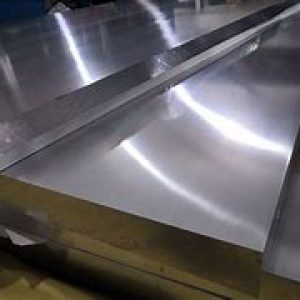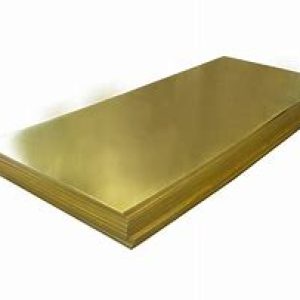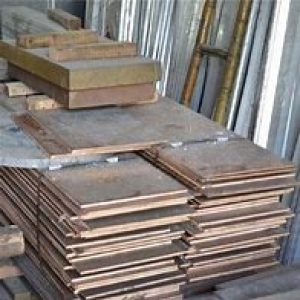
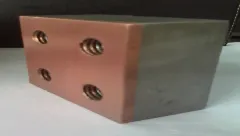
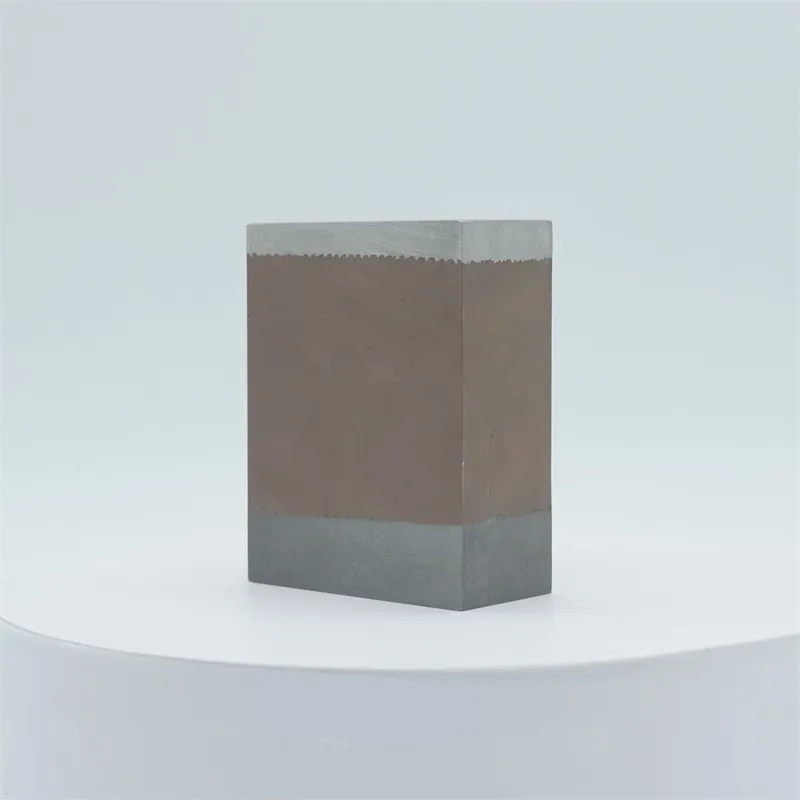

Overview of AI&AI Alloy/ Cu & Cu Alloy Forgings Copper Forgings
Al & Al alloy forgings are metal products made of aluminum alloy material with Al (aluminju) as the main component through the forging process. Al & Al alloy forgings have excellent machinability, konduttività elettrika, and lightweight characteristics. They are, għalhekk, widely used in many fields.
Manufacturing Methods and Characteristics of AI&AI Alloy/ Cu & Cu Alloy Forgings Copper Forgings
Melting: Aluminju, ram, and other alloy materials are heated above the melting point and stirred thoroughly to form a uniform alloy melt.
Pouring: the alloy melt is poured into a mold, and the alloy ingot is obtained after cooling.
Sawing: The ingot is sawed into billets of a certAln size.
Heating: The billet is heated to a forging temperature to give it plasticity.
Forging: Place the heated billet into the forging mold and apply a high-pressure shock wave to cause the billet to undergo plastic deformation and form the desired shape and size of the forging.
Trattament tas-sħana: To improve their properties, appropriate heat treatment is performed on the forged Al and Al alloy forgings.
The Main Characteristics of AI&AI Alloy/ Cu & Cu Alloy Forgings
Copper Forgings Good machining performance: Al & Al alloy forgings have good plasticity and toughness and can be subjected to various machining operations, such as turning, milling, and drilling.
Excellent electrical conductivity: Aluminum alloy materials have good electrical conductivity, so Al & Al alloy forgings are widely used in electronics, electricity, u oqsma oħra.
Lightweight characteristics: Aluminum alloy materials have a lower density, which is conducive to achieving lightweight parts and reducing energy consumption and noise.
High strength and corrosion resistance: Al & Al alloy forgings can improve their strength and corrosion resistance by adding alloying elements and an appropriate heat treatment process.
Application Areas of AI&AI Alloy/ Cu & Cu Alloy Forgings Copper Forgings
Manifattura tal-karozzi
Al & Al alloy forgings are widely used in automobile manufacturing and are mainly applied to manufacturing automobile parts, bħal magni, transmission, suspension systems, eċċ. As aluminum alloy material has a lightweight advantage and good processing performance, aluminum alloy forgings can reduce the car’s overall weight and improve fuel economy and emission performance. Barra minn hekk, the aluminum alloy material has good thermal conductivity, which is conducive to heat dissipation of high-temperature parts such as engines and improves the safety performance of automobiles.
Manifattura ta' tagħmir elettroniku
Al & Al alloy forgings also have a wide range of applications in the manufacture of electronic equipment, bħal bordijiet taċ-ċirkwiti, konnetturi, terminals, eċċ. Aluminum alloy material has excellent conductivity and processing performance, suitable for manufacturing high-precision, high-stability electronic components. Fl-istess ħin, the lightweight characteristics of aluminum alloy materials are also conducive to improving the portability and reliability of electronic equipment.
Construction field
Fil-kostruzzjoni, Al & Al alloy forgings can be used to manufacture building structural parts, decorative parts, u l-bqija. Aluminum alloy material has a lightweight advantage and high-strength performance, so it can greatly reduce the weight of the building, reduce the foundation bearing pressure, and improve the seismic performance and safety of the building. Fl-istess ħin, the corrosion resistance and aesthetics of aluminum alloy materials also make them suitable for building decoration.
Qasam aerospazjali
Al & Al alloy forgings also have a wide range of applications in the aerospace field, such as Aircraft fuselage, ġwienaħ, engine parts, eċċ. Aluminum alloy materials have lightweight advantages and high-strength performance, which is conducive to improving Alrcraft’s fuel economy and flight safety. Fl-istess ħin, the corrosion resistance and high-temperature performance of aluminum alloy materials also make them suitable for special environmental conditions in the aerospace field.
Product Features of AI&AI Alloy/ Cu & Cu Alloy Forgings Copper Forgings
1) Small specific gravity.
2) The interfacial bonding strength is high.
3) Excellent electrical conductivity and thermal conductivity.
4) The combination of copper and aluminum in the absence of oxygen there is no third substance between copper and aluminum, so the interface will not produce electrochemical corrosion for a long time.
5) Continuous production can be realized with high-quality stability.
6) It can withstand all kinds of severe processing, including deep drawing, eċċ
7) The ratio of copper to aluminum and the structure of copper and aluminum can be adjusted according to customer demand.
Profil tal-Kumpanija
Metal Plates 4u is a trusted global chemical material supplier & manifattur b'aktar minn 12-il sena esperjenza fil-forniment ta 'prodotti tar-ram u qraba ta' kwalità super għolja.
Il-kumpanija għandha dipartiment tekniku professjonali u Dipartiment ta 'Superviżjoni tal-Kwalità, laboratorju mgħammar tajjeb, u mgħammra b'tagħmir ta 'ttestjar avvanzat u ċentru ta' servizz għall-konsumatur ta 'wara l-bejgħ.
Jekk qed tfittex metall ta 'kwalità għolja Bord tal-kisi u servizz ta' pproċessar, jekk jogħġbok tħossok liberu li tikkuntattjana jew ikklikkja fuq il-prodotti meħtieġa biex tibgħat inkjesta.
Ħlas Mmetodi of AI&AI Alloy/ Cu & Cu Alloy Forgings Copper Forgings
L/C, T/T, Unjoni tal-Punent, Paypal, Karta tal-Kreditu eċċ.
Ġarr bil-baħar ta AI&AI Alloy/ Cu & Cu Alloy Forgings Copper Forgings
Jista 'jiġi mibgħut bil-baħar, bl-ajru, jew billi tiżvela ASAP hekk kif irċevuta tal-ħlas lura.
Pakkett ta AI&AI Alloy/ Cu & Cu Alloy Forgings Copper Forgings
Skont il-karatteristiċi tal-prodott u l-ħtiġijiet tal-klijenti.
Rimarka ta AI&AI Alloy/ Cu & Cu Alloy Forgings Copper Forgings
Jekk jogħġbok ipprovdi rekwiżiti tekniċi dettaljati biex tiffaċilita l-komunikazzjoni u tiddetermina s-soluzzjoni.
FAQ
Mistoqsija: What is the difference in performance between aluminum and aluminum alloy forgings and copper and copper alloy forgings?
Tweġiba: Aluminum and aluminum alloy forgings have low density and light weight, while copper and copper alloy forgings have high electrical and thermal conductivity. Barra minn hekk, there are differences in corrosion resistance and machinability between the two, depending on alloy composition and process conditions.
Mistoqsija: How to choose the right aluminum or copper alloy forgings?
Tweġiba: Choosing appropriate aluminum or copper alloy forgings requires consideration of application scenarios, performance requirements, cost and other factors. Per eżempju, for applications that require weight reduction, aluminum alloy forgings may be selected, while for applications that require high electrical conductivity, copper alloy forgings may be more suitable.
Mistoqsija: How difficult is it to process aluminum and aluminum alloy forgings and copper and copper alloy forgings?
Tweġiba: The processing difficulty of aluminum and aluminum alloy forgings and copper and copper alloy forgings varies depending on material properties and process requirements. Ġeneralment, aluminum alloy forgings have better machinability, while some copper alloys may be more difficult to machine due to their hardness and brittleness.
Mistoqsija: What are the environmental considerations for aluminum and aluminum alloy forgings and copper and copper alloy forgings?
Tweġiba: Aluminum and aluminum alloy forgings and copper and copper alloy forgings need to pay attention to the possibility of recycling and reuse in terms of environmental protection. With the increasing awareness of sustainable development, it has become a trend to choose alloy materials with good recyclability and reusability.
Mistoqsija: How to ensure the quality of aluminum and aluminum alloy forgings and copper and copper alloy forgings?
Tweġiba: The key to ensuring the quality of forgings lies in strictly controlling the quality of raw materials, optimizing the forging process, and strengthening quality inspection. Through reasonable process design and strict quality control, the performance and reliability of forgings can be ensured.