
Key takeaways
- Thickness selection is driven by the governing limit state, which may be stress, deflection, shear, bearing, or fatigue.
- Deflection is often the governing criterion for thin plates over long spans because it increases with the cube of the span.
- Corrosion and wear allowances are added to the structural thickness and should be documented separately.
- Fabrication and joining constraints can override a structurally adequate thickness.
- A documented step-by-step procedure makes thickness selection traceable and reviewable.
How to Select the Right Thickness for Your Metal Plate Application
Selecting the right thickness for a metal plate application means matching the plate's cross-sectional thickness to the mechanical, environmental, and fabrication demands the part will actually face. Four inputs drive the decision: the load or pressure the plate must carry, the stiffness or deflection limit the design allows, the corrosion allowance the service environment requires, and the fabrication method that will shape or join the plate. Thickness is not chosen by a single formula. It is chosen by checking each of these inputs against the candidate thickness and confirming that the governing one is satisfied.
The first step is to define what the plate must do. A plate used as a structural member resists bending and must limit deflection. A plate used as a wear surface resists abrasion and may need extra thickness for a wear allowance. A plate used as a pressure boundary resists internal pressure and must satisfy a design code. A plate used only as a cover or guard may be governed by handling stiffness rather than by stress. Writing down the governing function before comparing thicknesses prevents the common error of selecting a thickness that satisfies one requirement while failing another.
The second step is to identify the governing limit state. For most flat plates, that state is either bending stress, deflection, shear, or bearing at a connection. Bending stress scales with the square of the span and inversely with the square of the thickness, so a small increase in thickness produces a large increase in bending capacity. Deflection scales with the cube of the span and inversely with the cube of the thickness, so deflection is usually the more sensitive criterion for thin plates over long spans. Shear and bearing are less sensitive to thickness but become governing when loads are concentrated at supports or bolts.
The third step is to apply the corrosion and wear allowance. A plate that meets the structural calculation may still fail in service if the environment removes material over time. The allowance is added to the calculated minimum thickness, not substituted for it. Its size depends on the corrosivity of the environment, the expected service life, and whether the surface is protected by coating or cathodic protection. In many specifications the allowance is stated as a separate addition so that the structural thickness and the corrosion thickness can be verified independently.
The fourth step is to confirm that the selected thickness can be fabricated and joined. Thickness affects cutting method, forming radius, weld preparation, and the risk of distortion. A thickness that is structurally adequate may be impractical to bend to the required radius or may require preheat before welding. Checking fabrication constraints before finalizing the thickness avoids redesign later in the project.
A practical selection procedure therefore runs as follows: define the governing function, calculate the minimum thickness for the governing limit state, add the corrosion and wear allowance, check fabrication and joining constraints, and then round up to a standard available thickness. Each step should be documented so that the final thickness can be traced back to the requirement that controlled it. When two requirements are close, the larger thickness governs.
It is also useful to record which requirement governed the final choice. If deflection governed, the thickness may be reduced later by adding stiffeners rather than by increasing plate thickness. If corrosion governed, the thickness may be reduced by changing the material or the coating. Knowing the governing requirement makes later optimization possible without repeating the entire calculation.
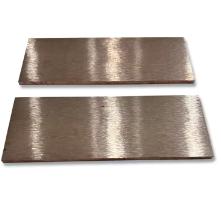
Key Factors That Determine Metal Plate Thickness
Thickness selection is a multi-factor decision, and the factors interact. The most common are load magnitude and type, span or unsupported distance, deflection limit, corrosion allowance, wear allowance, temperature, fabrication method, and connection design. Each factor can become governing depending on the application, so none can be ignored during selection.
Load magnitude and type set the starting point. A uniformly distributed load produces different bending and deflection than a concentrated load at mid-span, even when the total load is the same. Impact and cyclic loads require additional consideration because they can govern fatigue rather than static strength. The load case that produces the largest stress or deflection is the one used for thickness calculation.
Span or unsupported distance is often the dominant geometric variable. For a simply supported plate, bending stress increases with the square of the span and deflection increases with the cube of the span. Doubling the span can therefore increase deflection by a factor of eight if thickness is unchanged. Reducing the span by adding supports is often more efficient than increasing thickness.
Deflection limit is a serviceability requirement rather than a strength requirement. A plate may be strong enough but still deflect more than the application allows, causing ponding, misalignment, or damage to attached equipment. The allowable deflection is usually stated as a fraction of the span, and it must be checked separately from stress.
Corrosion and wear allowances are additions to the calculated thickness. They depend on the environment and the expected service life. In aggressive environments the allowance can be a significant fraction of the total thickness, and it should be reviewed when the service life or the environment changes.
Temperature affects both the allowable stress and the dimensional stability of the plate. At elevated temperatures, allowable stress values are reduced, which may require additional thickness. Thermal expansion and restraint can also produce secondary stresses that are not captured by simple bending calculations.
Fabrication method affects the practical minimum thickness. Very thin plates may be difficult to weld without distortion, while very thick plates may require special cutting and forming equipment. The selected thickness should be compatible with the available fabrication processes and with the required joint details.
Connection design can govern thickness independently of the plate span. Bolted or welded connections introduce bearing, tear-out, and shear stresses that depend on plate thickness. A plate that is adequate for bending may still need additional thickness at the connection, or local reinforcement may be added instead.
How Load, Span, and Support Conditions Affect Thickness
Load, span, and support conditions together determine the bending moment and deflection in a plate, and therefore the thickness required to keep stress and deflection within limits. The relationship is not linear: thickness appears in the section modulus and in the moment of inertia, so its effect on capacity is stronger than its effect on weight.
For a simply supported plate under uniform load, the maximum bending stress is proportional to the load and the square of the span, and inversely proportional to the square of the thickness. The maximum deflection is proportional to the load and the fourth power of the span, and inversely proportional to the third power of the thickness. These relationships explain why span reduction is often the most effective way to reduce required thickness.
Support conditions change the coefficients in these relationships. A plate fixed at both ends develops lower mid-span bending moment than a simply supported plate, but it develops negative moment at the supports. A cantilever plate has its maximum moment at the support and its maximum deflection at the free end. The same plate thickness can therefore be adequate or inadequate depending on how it is supported.
Concentrated loads produce higher local stresses than uniform loads of the same total magnitude. The difference is captured by a load distribution width or by a local bending check. When concentrated loads are present, the thickness may be governed by local effects rather than by overall bending.
Dynamic and cyclic loads require a fatigue check in addition to a static check. Fatigue capacity depends on stress range, number of cycles, and detail category. Increasing thickness can reduce stress range, but it can also increase restraint and secondary stresses, so the effect is not always favorable.
In practice, the designer should calculate the required thickness for the governing load combination and support condition, then verify that deflection, shear, bearing, and fatigue are also satisfied. If any check is not satisfied, the thickness is increased or the geometry is changed until all checks pass.
Corrosion, Wear, and Service Life Allowances
Corrosion and wear allowances are added to the calculated structural thickness to ensure that the plate remains adequate throughout its service life. The allowance is not a safety factor on stress; it is a separate addition that accounts for material loss over time.
The size of the corrosion allowance depends on the corrosivity of the environment, the material selected, the presence of protective coatings, and the expected service life. In mildly corrosive environments the allowance may be small, while in aggressive environments it can be a substantial fraction of the total thickness. The allowance should be stated explicitly in the specification so that it can be verified.
Wear allowance is added when the plate surface is subject to abrasion, erosion, or sliding contact. Wear rate depends on the abrasive material, the contact pressure, and the sliding speed. In some applications a replaceable wear liner is more economical than increasing the thickness of the base plate.
Service life is the period over which the allowance is intended to be consumed. If the service life is extended, the allowance must be reviewed. If the environment changes, the allowance must also be reviewed. Recording the assumed service life and environment in the design basis makes later review possible.
Protective measures can reduce or eliminate the need for a corrosion allowance. Coatings, linings, cathodic protection, and material selection all affect the rate of material loss. When protective measures are used, the allowance may be reduced, but the reliability of the protection must be considered.
The total thickness is therefore the sum of the structural thickness and the allowances, rounded up to a standard available size. The structural thickness and the allowances should be documented separately so that each can be verified against its own requirement.
Fabrication and Joining Constraints on Plate Thickness
Fabrication and joining constraints can override a structurally adequate thickness. A thickness that satisfies stress and deflection checks may still be impractical to cut, form, or weld with the available equipment and procedures.
Cutting method depends on thickness and material. Thin plates can be sheared or laser cut, while thick plates may require plasma, oxy-fuel, or waterjet cutting. The selected thickness should be compatible with the cutting process that will be used, and the edge quality required by the design should be considered.
Forming radius depends on thickness and material ductility. A minimum bend radius is usually specified as a multiple of thickness. If the required radius is smaller than the minimum, the plate may crack during forming. In that case the thickness may need to be reduced, the material changed, or the bend replaced by a welded joint.
Weld preparation and distortion depend on thickness. Thick plates require larger weld preparations and may need preheat to avoid cracking. Thin plates are more susceptible to distortion and may require fixtures or sequence control. The selected thickness should be compatible with the welding procedure and the required joint quality.
Handling and erection also depend on thickness. Very thin plates may be damaged during handling, while very thick plates may require special lifting equipment. The selected thickness should be compatible with the handling and erection methods available on site.
When fabrication constraints conflict with structural requirements, the design should be adjusted rather than forcing an impractical thickness. Adding stiffeners, changing the support layout, or changing the material are common alternatives to increasing thickness.
A Step-by-Step Thickness Selection Procedure
A documented procedure helps ensure that thickness selection is consistent and traceable. The following steps can be applied to most metal plate applications.
Step 1: Define the governing function of the plate. State whether the plate is structural, a pressure boundary, a wear surface, or a cover. Record the loads, environment, and service life.
Step 2: Identify the governing limit state. Check bending stress, deflection, shear, bearing, and fatigue. Determine which one controls the required thickness.
Step 3: Calculate the minimum structural thickness for the governing limit state using the appropriate load combination and support condition.
Step 4: Add the corrosion and wear allowances. State the assumed environment and service life, and document the allowance separately from the structural thickness.
Step 5: Check fabrication and joining constraints. Confirm that the thickness can be cut, formed, welded, and handled with the available methods.
Step 6: Round up to a standard available thickness and record the governing requirement. If two requirements are close, the larger thickness governs.
Step 7: Review the selection when any input changes. A change in load, span, environment, or service life can change the governing requirement and therefore the required thickness.
Frequently Asked Questions
These questions address common points of confusion when selecting metal plate thickness. The answers are general and should be checked against the specific design requirements of the application.
Is thicker always better? No. Thicker plate increases weight, cost, and fabrication difficulty, and it can increase restraint and secondary stresses. The correct thickness is the smallest one that satisfies all governing requirements.
Can deflection govern instead of stress? Yes. For thin plates over long spans, deflection often governs because it increases with the cube of the span while stress increases with the square of the span. Both must be checked.
How is corrosion allowance determined? It depends on the environment, material, protection, and service life. It should be stated explicitly and added to the structural thickness rather than included in the stress calculation.
Does thickness affect weldability? Yes. Thick plates may require preheat and larger weld preparations, while thin plates are more prone to distortion. The selected thickness should be compatible with the welding procedure.
Can a plate be too thin to fabricate? Yes. Very thin plates may be difficult to weld without distortion or to handle without damage. Fabrication constraints should be checked before finalizing the thickness.
When should the thickness be reviewed? Whenever load, span, support condition, environment, service life, or fabrication method changes. A change in any of these can change the governing requirement.
Frequently asked questions
Is thicker metal plate always better?
No. Thicker plate increases weight, cost, and fabrication difficulty, and it can increase restraint and secondary stresses. The correct thickness is the smallest one that satisfies all governing requirements.
Can deflection govern instead of stress?
Yes. For thin plates over long spans, deflection often governs because it increases with the cube of the span while stress increases with the square of the span. Both must be checked.
How is corrosion allowance determined?
It depends on the environment, material, protection, and service life. It should be stated explicitly and added to the structural thickness rather than included in the stress calculation.
Does thickness affect weldability?
Yes. Thick plates may require preheat and larger weld preparations, while thin plates are more prone to distortion. The selected thickness should be compatible with the welding procedure.
Can a plate be too thin to fabricate?
Yes. Very thin plates may be difficult to weld without distortion or to handle without damage. Fabrication constraints should be checked before finalizing the thickness.
When should the thickness be reviewed?
Whenever load, span, support condition, environment, service life, or fabrication method changes. A change in any of these can change the governing requirement.
Metal Plates 4u is a large enterprise focusing on the research, development, production and sales of copper products. With multiple production bases and R&D centers, its copper products sell well in domestic and foreign markets and are well received by customers.
Complete variety, excellent quality, innovative research and development. Customized services and professional consultation are available. If you need metal clad products, please feel free to contact us.