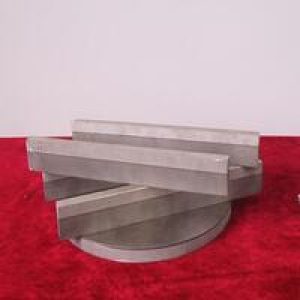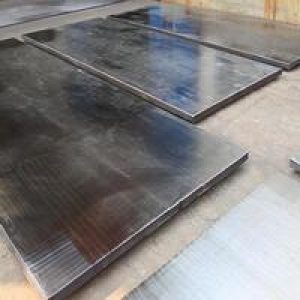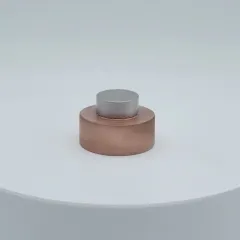
Apèsi sou Nerjaveèi Steel/ Cu Clad Rod Stainless Steel-copper Copoze Rnan
Stainless steel/copper composite rod is a composite material composed of stainless steel and copper, with excellent mechanical properties and corrosion resistance. Stainless steel is a high-strength, medium-density metal with high hardness, gwo fòs, and good corrosion resistance. An menm tan an, copper has good electrical conductivity and high wear resistance, which can improve the composite rod’s electrical conductivity and wear resistance.
Advantages of Nerjaveèi Steel/ Cu Clad Rod Stainless Steel-copper Copoze Rnan
Good electrical conductivity: Titanium and copper in the stainless steel/copper composite rod are good conductors, and the electrical conductivity can reach more than 90%, which is suitable for electrochemistry and electronic device manufacturing.
Pri ki ba: The production cost of stainless steel/copper composite rods is relatively low. Compared with pure titanium alloy and copper alloy, it can reduce production costs and improve product market competitiveness.
Fasil pou soude: Stainless steel/copper composite rods can be used for various welding operations, such as fusion welding, electric welding, elatriye, ki se pratik pou asanble a ak antretyen nan liy pwodiksyon an.
Aplikasyon de Nerjaveèi Steel/ Cu Clad Rod Stainless Steel-copper Copoze Rnan
Endistri pouvwa: Stainless steel/copper composite rods are often used to manufacture power equipment such as transformers, câbles, switches, elatriye, because of their high conductivity and corrosion resistance.
Petrochemical industry: Stainless steel/copper composite rods are commonly used in the petrochemical industry to manufacture pipes, tiyo, ponp, and other equipment because they are resistant to corrosion by acids, alkali, sèl, ak lòt pwodwi chimik yo. Chlor-alkali industry: equipment for industrial processes that produce chemicals such as sodium hydroxide and hydrochloric acid.
Machinery manufacturing industry: Stainless steel/copper composite rods are commonly used in the machinery manufacturing industry to manufacture precision parts such as gears, bi, cams, sele, elatriye, because of their high precision, gwo fòs, and high wear resistance.
Endistri otomobil: Stainless steel/copper composite rods are commonly used in the automotive industry to manufacture components such as exhaust systems, engines, transmission systems, elatriye, due to their high wear and corrosion resistance.
Medical device industry: Stainless steel/copper composite rods are commonly used in the medical device industry to manufacture handles, handwheels, tiyo, and other parts of medical devices because of their high strength, segondè rezistans korozyon, ak segondè konduktiviti tèmik.
Konpayi Profile
Metal Plates 4u is a trusted global chemical material supplier & manifakti ki gen plis pase 12-ane-eksperyans nan bay super-wo kalite kwiv ak pwodwi fanmi.
Konpayi an gen yon depatman teknik pwofesyonèl ak Depatman Sipèvizyon Kalite, yon laboratwa byen ekipe, ak ekipe ak ekipman tès avanse ak sant sèvis kliyan apre-lavant.
Si w ap chèche pou metal-wo kalite Panèl Cladding ak sèvis pwosesis, tanpri ou lib pou kontakte nou oswa klike sou pwodwi ki nesesè yo voye yon ankèt.
Grade of Stainless Steel/ Cu Clad Rod Stainless Steel-copper Copoze Rnan
The grade of Stainless steel/ Cu Clad Rod Stainless steel-copper composite rod is SS/Cu &Avèk alyaj.
Standard of Stainless Steel/ Cu Clad Rod Stainless Steel-copper Copoze Rnan
GB/T12769.
Package of Stainless Steel/ Cu Clad Rod Stainless Steel-copper Copoze Rnan
Dapre karakteristik pwodwi ak bezwen kliyan yo.
Remark of Stainless Steel/ Cu Clad Rod Stainless Steel-copper Copoze Rnan
Tanpri bay egzijans teknik detaye pou fasilite kominikasyon ak detèmine solisyon an.
FAQ
Kesyon: What are the advantages of stainless steel copper composite rods compared to single metal materials?
Repons: Stainless steel copper composite rods not only inherit the corrosion resistance and strength of stainless steel, but also combine the excellent electrical and thermal conductivity of copper. This composite structure allows the stainless steel copper composite rod to have better electrical and thermal conductivity while maintaining strength and corrosion resistance.
Kesyon: What is the electrical conductivity of stainless steel copper composite rods?
Repons: Stainless steel copper composite rod has good electrical conductivity, and its electrical conductivity is better than stainless steel and close to pure copper. This makes it excellent in situations where efficient conduction of electricity is required, such as power transmission, electronic equipment and other fields.
Kesyon: What is the corrosion resistance of stainless steel copper composite rods?
Repons: Stainless steel copper composite rods have excellent corrosion resistance, sitou nan imid, anviwònman asid oswa alkalin, and can resist the erosion of a variety of corrosive media. This characteristic makes it have broad application prospects in corrosive environments such as chemical industry and ocean.
Kesyon: What is the manufacturing process of stainless steel copper composite rods?
Repons: The manufacturing process of stainless steel copper composite rods includes compositing stainless steel and copper through specific composite technologies (such as rolling composite, explosion composite, elatriye.), and then undergoing subsequent processing and heat treatment steps to ensure the firmness and stability of the composite interface. Overall performance is stable.
Kesyon: How to correctly install and use stainless steel copper composite rods?
Repons: When installing and using stainless steel copper composite rods, pwosedi fonksyònman ki enpòtan ak estanda sekirite yo ta dwe swiv. Be careful to avoid excessive bending, impact and scratches, ki ka afekte pèfòmans li. An menm tan an, choose the appropriate connection method and fixation method according to the specific application scenario.
Kesyon: What are the precautions for the maintenance of stainless steel copper composite rods?
Repons: Stainless steel copper composite rods should be cleaned and inspected regularly to detect and deal with possible damage or corrosion in a timely manner. Lè netwaye, itilize net detèjan ak twal mou, epi evite itilize sibstans korozivite tankou asid fò ak alkali. Epitou, avoid prolonged exposure to high temperatures or moisture.