



In today’s industrial and construction sectors, material selection has a critical impact on product performance, laang Liewensdauer, a kascht. Aluminum alloy and stainless steel are two commonly used metal materials, all vun deenen huet eng Rei vu Virdeeler an Aschränkungen. Ier mer an de Verglach vun dësen zwee Materialien daucht, mir mussen éischt hir Basis Konzepter an Eegeschafte verstoen.
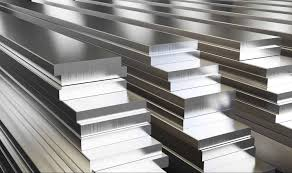
Aluminum alloy is an alloy synthesized from aluminum and other metal elements (wéi Kupfer, Magnesium, Zénk, etc.). Et ass liicht, has good electrical conductivity and strong thermal conductivity, and is highly plastic. Aluminum alloys are widely used in aerospace, automobile Fabrikatioun, electronic appliances, Gebai Dekoratioun, an aner Felder. Due to their lightweight and easy workability, aluminum alloys are favored where structural weight reduction is required.
Stainless steel is a steel containing at least 10.5% chrom, which forms a dense oxide film that provides excellent corrosion resistance. There are many types of stainless steel, including austenitic stainless steel, ferritic stainless steel, martensitic stainless steel, etc. They have their characteristics in terms of strength, Hëtzt Resistenz, corrosion Resistenz, etc.. They are widely used in the chemical industry, Liewensmëttel Veraarbechtung, medezinesch Ausrüstung, Kichen Apparater, architectural decoration, and many other fields.
Nächst, we will conduct a detailed comparison between aluminum alloy and stainless steel from multiple angles to explore which material is superior in practical applications.
1. Korrosiounsbeständegkeet
One of stainless steel’s most outstanding properties is its corrosion resistance. Chromium forms a dense oxide film in stainless steel. This film effectively blocks the erosion of moisture and oxygen and protects the material from corrosion. This characteristic allows stainless steel to have a longer service life in humid or corrosive environments. Zum Beispill, in marine environments or chemical plants, the use of stainless steel can significantly reduce maintenance and replacement costs.
Am Géigesaz, although aluminum alloys also have a certain degree of corrosion resistance, in some extreme environments, such as high salt, high humidity, or acidic or alkaline environments, the corrosion resistance of aluminum alloys may be less than that of stainless steel. Zousätzlech, the corrosion resistance of aluminum alloys is affected after they are physically damaged, while stainless steel is better able to maintain its properties.
2. Strength and hardness
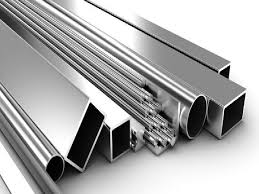
Stainless steel generally has high strength and hardness, especially if it is properly heat treated. Its strength and hardness can be comparable to some alloy steels. This makes stainless steel excellent at withstanding heavy loads or high-intensity working conditions. Zum Beispill, stainless steel can provide sufficient strength and wear resistance when manufacturing mechanical parts such as bearings, Gears, and springs.
In comparison, aluminum alloys have lower strength and hardness, and although they can be improved through alloying and heat treatment, they are usually inferior to stainless steel under the same conditions. Aluminum alloys may not be the best choice when heavy loads are required or in high-stress environments.
3. Heat resistance and fire resistance
Stainless steel maintains good mechanical properties and stability in high-temperature environments, making it suitable for high-temperature working environments, such as stoves, Kessel, an Hëtzt exchangers. Zousätzlech, stainless steel’s fire resistance is better than that of aluminum alloy, which can provide better protection in emergencies such as fires. In the construction sector, the fire resistance of stainless steel is particularly important as it improves the safety and durability of buildings.
The strength of aluminum alloys decreases rapidly at high temperatures, and they easily react with oxygen, causing oxidation. Dofir, aluminum alloys generally do not perform as well as stainless steel in high-temperature applications.
4. Verschleißbeständegkeet
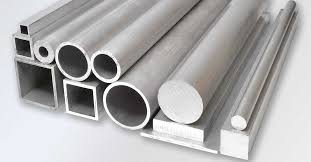
Stainless steel generally has better wear resistance than aluminum alloys. Under high load and friction conditions, stainless steel maintains good surface integrity and is not prone to wear. This is especially important when manufacturing bearings, Gears, and other mechanical parts. The wear-resistant properties of stainless steel not only extend the service life of the product but also reduce the frequency of maintenance and replacement.
Although aluminum alloy has certain wear resistance, it may not be as good as stainless steel when subjected to large friction. In some applications that require wear-resistant materials, such as automotive engine parts, cutting tools, etc., stainless steel is often a better choice.
5. Ease of processing
Aluminum alloy is easy to process due to its good plasticity and can be formed by extrusion, Casting, Schmieden, an aner Methoden. Allerdéngs, stainless steel also has good processing properties. It can be processed using conventional metalworking techniques such as cutting, Bueraarbechten, Schweess, and forging. Because of stainless steel’s strength and hardness, its machined parts often have better durability and longer service lives.
6. Appearance and aesthetics
Stainless steel has a modern and high-end appearance. It is easy to clean and maintain, so it is very popular in areas such as architectural decoration, Kichen Apparater, a Miwwelen. The surface of stainless steel can be polished, gebastelt, Beschichtete, etc., to meet different aesthetic requirements. Am Géigesaz, Aluminiumlegierungen, although they also have a good appearance, are better than stainless steel in terms of scratch resistance and retaining luster.
7. Environmental protection and recyclability
Stainless steel and aluminum alloy are both recyclable materials and environmentally friendly. Allerdéngs, the smelting and refining process of stainless steel is relatively more mature and efficient in the recycling process, so stainless steel also has certain advantages in terms of environmental protection and recyclability. Stainless steel has a higher recycling rate, and the recycling process has a lower impact on the environment.
Fournisseur
Metallplacke 4u ass eng grouss Entreprise déi sech op d'Fuerschung konzentréiert, Entwécklung, Produktioun a Verkaf vu Kupferprodukter. Mat multiple Produktiounsbasen a R&D Zentren, seng Kupferprodukter verkaafen gutt an den auslänneschen an auslännesche Mäert a gi gutt vun de Clienten ugeholl.
Komplett Varietéit, excellent Qualitéit, innovativ Fuerschung an Entwécklung. Personaliséiert Servicer a professionell Berodung sinn verfügbar. If you need metal clads products, weg fillen gratis eis ze kontaktéieren.