



Asosiy xulosalar
- 316 stainless steel contains molybdenum, giving it superior resistance to chlorides and acids compared to 304.
- 304 is the more economical choice for general applications without extreme corrosive exposure.
- 316 is recommended for marine, kimyoviy, and coastal environments where corrosion risk is high.
- Both grades offer excellent formability and weldability, but post-weld treatment may benefit 316 in harsh conditions.
What Is the Difference Between 304 va 316 Stainless Steel Plates?
The primary difference between 304 va 316 stainless steel plates is their alloy composition: 316 tarkibida molibden mavjud, qaysi 304 lacks, along with common alloying elements used in metal plates. Molybdenum significantly enhances 316's resistance to chlorides (such as saltwater) and acidic chemicals. For standard indoor and outdoor applications without extreme corrosive exposure, 304 provides a cost-effective alternative.
This distinction affects material selection for structural, me'moriy, or industrial projects. Both grades are austenitic stainless steels with excellent formability and weldability, but their performance in harsh environments differs. This article compares their properties, ilovalar, and selection criteria.
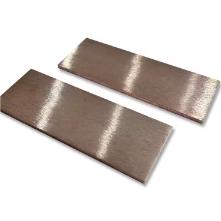
Nima 304 Zanglamaydigan po'latdan yasalgan plastinka?
304 zanglamaydigan po'lat, the most widely used austenitic grade, contains chromium and nickel. These provide good corrosion resistance, mukammal shakllanish qobiliyati, and high strength. 304 plates are common in kitchen equipment, oziq-ovqat mahsulotlarini qayta ishlash, chemical containers, architectural trim, and automotive parts where corrosive exposure is moderate.
304 lacks molybdenum, so it is less resistant to pitting and crevice corrosion in chloride-rich environments. Biroq, for fresh water, mild acids, or atmospheric exposure, 304 performs well and costs significantly less than 316.
Nima 316 Zanglamaydigan po'latdan yasalgan plastinka?
316 stainless steel is an austenitic grade containing molybdenum (2-3%) in addition to chromium and nickel. Molybdenum provides superior resistance to corrosion from chlorides, sulfat kislota, and other harsh chemicals. Natijada, 316 plates are the preferred choice for marine environments, kimyoviy qayta ishlash korxonalari, farmatsevtika uskunalari, and coastal architectural structures, and are available in configurations such as perforated metal plates.
Vaholanki 316 costs more than 304, its longer service life in aggressive environments can lower maintenance and replacement costs over time. It also has better high-temperature strength and oxidation resistance than 304.

Asosiy farqlar: 304 va boshqalar 316 Stainless Steel Plates
The table below summarizes the main differences between 304 va 316 stainless steel plates across key dimensions. Use these factors to guide your selection based on specific operating conditions and budget.
| Hajmi | 304 Zanglamaydigan po'lat | 316 Zanglamaydigan po'lat |
|---|---|---|
| Molybdenum Content | None | Contains molybdenum (2-3%) |
| Korroziyaga qarshilik | Good in fresh water and mild environments | Excellent in chloride and acid environments |
| Odatdagi ilovalar | Oshxona jihozlari, oziq-ovqat mahsulotlarini qayta ishlash, avtomobilsozlik | Dengizchi, kimyoviy ishlov berish, farmatsevtika mahsulotlari |
| Narxi | Lower cost | Higher cost |
| Magnit xossalari | Magnit bo'lmagan (slightly magnetic after cold work) | Magnit bo'lmagan (slightly magnetic after cold work) |
| Payvandlash qobiliyati | Ajoyib | Ajoyib; may need post-weld treatment in severe conditions |

How to Choose Between 304 va 316 Stainless Steel Plates
Grade selection depends on environmental exposure, required longevity, va byudjet. For interiors, food contact surfaces, and general industrial use with minimal chloride exposure, 304 provides a good balance of performance and cost. For exposure to saltwater, de-icing salts, bleach, or acidic chemicals, 316 is the safer choice to prevent premature corrosion failure. When weight savings matter, 6082 alyuminiy qotishmasi offers a lighter alternative for specific non-corrosive applications.
Consider the aesthetic finish: both grades can be polished, taralgan, yoki qoplangan. Lekin 316 may retain its appearance longer in coastal settings. Both grades weld well, lekin 316 may need post-weld annealing in certain severe environments to restore maximum corrosion resistance.
Frequently Asked Questions About 304 va 316 Stainless Steel Plates
Below are answers to common questions about these two grades. These points clarify the differences and practical implications for your project.

Tez-tez beriladigan savollar
Bu 316 stainless steel always better than 304?
Har doim emas. 316 offers better corrosion resistance in harsh environments, but for many standard applications 304 performs adequately at a lower cost. The choice depends on the specific exposure conditions and budget.
mumkin 304 be used in marine environments?
304 can be used in mild marine environments but will likely corrode faster than 316 when exposed to saltwater or salt spray. 316 is the preferred grade for prolonged marine exposure.
How can I tell 304 va 316 apart visually?
They look very similar. A chemical spot test (masalan, using a molybdenum test kit) can distinguish them, as 316 will show a different reaction due to molybdenum content.
Which grade is easier to weld?
Both 304 va 316 have excellent weldability. uchun 316, using matching filler metal is recommended, and in very corrosive service, post-weld annealing may be necessary to restore corrosion resistance.
Bu 316 magnit?
Kabi 304, 316 is generally non-magnetic in the annealed condition. Some magnetism can develop after cold working, but it remains less magnetic than ferritic grades.
Metal Plates 4u is a large enterprise focusing on the research, rivojlanish, mis mahsulotlarini ishlab chiqarish va sotish. Bir nechta ishlab chiqarish bazalari va R&D markazlari, uning mis mahsulotlari ichki va tashqi bozorlarda yaxshi sotiladi va mijozlar tomonidan yaxshi qabul qilinadi.
To'liq xilma-xillik, mukammal sifat, innovatsion tadqiqotlar va ishlanmalar. Maxsus xizmatlar va professional maslahat mavjud. Agar sizga metall qoplamali mahsulotlar kerak bo'lsa, iltimos biz bilan bog'laning.