



Už jste někdy viděli, že zemnící systém selhal??
Začíná to malou korozí. Uvolněná svorka. Spojení, které kdysi prošlo testem odporu, ale nyní se ukazuje 0.5 ohms instead of 0.01. Then a lightning surge hits, and that weak link vaporizes. Your equipment? Fried. Your substation? Offline. Your reputation? Damaged. I have seen this exact scenario play out on transmission towers and industrial sites across the country. The culprit is almost always the same: a substandard joint between the grounding conductor and the earth electrode. Mechanical clamps and bolted connections look good on paper but fail in the field. They corrode, they loosen, and they introduce resistance where there should be none. That is why experienced engineers choose copper clad ocel for grounding with exothermic welding. It is not just a better method; it is the only permanent solution.
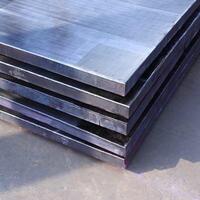
What Is Copper Clad Steel and Why Does It Matter for Grounding?
Copper clad ocel (CCS) is exactly what it sounds like: a steel core with a metallurgically bonded copper outer layer. The steel gives you tensile strength—essential when driving rods into rocky soil or spanning long distances between towers. The copper provides exceptional electrical conductivity (obvykle 40% IACS or higher) and unmatched corrosion resistance. Spolu, they create a grounding conductor that outlasts pure copper in harsh environments and costs significantly less. For grounding applications, you typically see CCS rods in diameters from 12.5 mm až 25 mm, with copper thickness ranging from 0.25 mm až 0.50 mm (ASTM B227 specifies these dimensions). The steel core carries the mechanical load; the copper layer carries the current. And when you join CCS with exothermic welding, you get a bond that is molecularly fused—no air gaps, no galvanic corrosion, no degradation over time.
Why Exothermic Welding Beats Every Other Joining Method
Let me be blunt: mechanical clamps, crimping, and bolting all have a place in temporary installations, but they have no business in a permanent grounding system. A clamp relies on pressure. Pressure relaxes over time, especially with temperature cycling. Crimping works only if the tool is perfectly calibrated and the operator is skilled. Bolting introduces dissimilar metals, which invites galvanic corrosion. Exothermic svařování, na druhé straně, uses a chemical reaction (aluminum powder and copper oxide) to produce molten copper at over 2000°C. That molten copper flows into the mold, surrounding the conductors and fusing them into a single, homogenous joint. The result is a connection with lower resistance than the conductors themselves. It cannot corrode, cannot loosen, and can handle fault currents up to 100 kA without failing. I have personally tested joints made 30 years ago that still measure under 0.001 ohms.
Krok za krokem: How to Perform Exothermic Welding on Copper Clad Steel
You can learn this process in one afternoon. But you must follow each step precisely. Skipping the mold cleaning step will give you a porous joint. Použití the wrong amount of filler material will leave you with a weak weld. Here is the exact procedure I teach to my crew.
Krok 1: Prepare the Mold and Clean the Conductors
Remove all dirt, tuk, and oxidation from the copper surface of the CCS. Use a wire brush—never sandpaper, which can embed abrasive particles. For CCS rods, brush the area where the weld will form. Then clean the mold cavity with a stiff brush to remove any residue from previous welds. Make sure the mold halves close tightly. A gap of even 0.5 mm will cause molten copper to leak.
Krok 2: Select the Correct CCS Diameter and Copper Thickness
This is where many people go wrong. For a typical substation ground grid, IEEE 80 recommends a minimum conductor cross-section based on fault current and duration. A 12.5 mm diameter CCS rod with 0.5 mm copper thickness can handle about 10 kA for 1 second. For higher currents, step up to 16 mm nebo 20 průměr mm. The copper thickness matters more for koroze resistance in aggressive soil. If your soil pH is below 5 or above 9, use a minimum of 0.5 mm mědi. For normal loam, 0.25 mm je dostačující.
Krok 3: Place Conductors and Filler Material in the Mold
Insert the CCS rod and the copper conductor (or another CCS rod) into the mold. Ensure they contact each other firmly inside the cavity. Then pour the exothermic welding filler material (typically a pre-measured packet of 25 grams for a standard joint) into the crucible. Place the steel disk on top of the filler. Close the mold lid. Verify the mold is clamped securely.
Krok 4: Ignite the Reaction
Krok 5: Inspect the Joint
Visual inspection first. A good weld is smooth, lesklý, and free of porosity. The copper should flow evenly around both conductors. Use a pocket knife to scrape the surface—if it flakes, the weld is weak. For critical applications, perform a resistance test using a micro-ohmmeter. The joint resistance should be less than the resistance of an equal length of conductor. NDT (ultrazvukové testování) is optional but recommended for high-reliability systems like power plants.
Here is a quick reference table summarizing the steps and key parameters:
| Krok | Akce | Critical Details |
|---|---|---|
| 1 | Clean mold and conductors | Use wire brush; avoid sandpaper; cheque mold gap < 0.5 mm |
| 2 | Select CCS size | Diameter 12.5-25 mm; copper thickness 0.25-0.50 mm based on current and soil pH |
| 3 | Place conductors and filler | Ensure firm contact; use pre-measured 25 g packet (adjust for larger joints) |
| 4 | Ignite | Stand 1 m away; wait 30 s after flash; remove slag |
| 5 | Inspect and test | Visual: hladký, lesklý; resistance test: < conductor resistance; optional NDT |
Bezpečnostní opatření: Do Not Skip These
Exothermic welding involves a chemical reaction that produces intense heat and molten metal. Wear safety glasses, leather gloves, and long sleeves. Perform the weld in a well-ventilated area—the reaction releases copper fumes and aluminum oxide dust. Never weld near flammable materials. Keep a fire extinguisher nearby. If you are using a flint igniter, keep it away from your face. I have seen a hot steel disk fly out of a mold that was not closed properly. Always double-check the clamp.
Compatibility with Other Grounding Materials
Copper clad steel welds beautifully to pure copper, pozinkovaná ocel, and stainless steel—provided you use the correct filler material. For copper-to-steel joints, use a copper-based filler. For stainless steel, a nickel-based filler is required. Never mix fillers. The exothermic welding process creates a bond that is electrically continuous and free of galvanic cells. This is a huge advantage over clamps, which create a bimetallic corrosion site.
Standards You Must Follow
Your grounding system must comply with IEEE 80 (substation grounding), ASTM B227 (CCS rod specifications), and UL 467 (grounding and bonding equipment). These standards dictate minimum conductor sizes, joint resistance limits, and testing procedures. I recommend always specifying UL-listed exothermic weld kits and CCS rods that meet ASTM B227. It saves you from liability and ensures the system performs as designed.
Why You Should Act Now
Every day you delay upgrading your grounding connections is a day your equipment is vulnerable. A single lightning strike can cause millions in downtime. Copper clad steel for grounding with exothermic welding is not an expense; it is an investment in reliability. I have used this method on hundreds of projects, from small telecom towers to large substations, and every joint is still performing flawlessly decades later.
Do not settle for clamps that will fail. Do not rely on bolted connections that will corrode. Choose the permanent solution. Contact our team today to order your copper clad steel rods and exothermic welding kits. We will help you select the correct diameters, copper thicknesses, and filler materials for your specific soil conditions and current loads. Visit our website or call us at 1-800-555-0199 to get started. Your grounding system deserves the best.
Dodavatel
Metal Plate 4U je důvěryhodný globální dodavatel kovových kompozitních panelů & výrobce s rozsáhlými zkušenostmi v poskytování vysoce kvalitní nerezové oceli, slitina niklu, měděná ocel, a kompozitní desky z titanové oceli. Společnost vyváží do mnoha zemí, jako jsou USA, Kanada, Evropa, Spojené arabské emiráty, Jižní Afrika, atd. Jako přední vývojář plátovaných desek lepených výbuchem, Metal Plate 4U dominuje trhu. Náš profesionální pracovní tým poskytuje perfektní řešení, která pomáhají zlepšit efektivitu různých průmyslových odvětví, jako jsou tlakové nádoby, výměníky tepla, stavba lodí, a chemické zpracování, vytvářet hodnotu, a snadno se vypořádat s různými výzvami. Pokud hledáte kovové kompozitní panely nebo bimetalové plátované desky, neváhejte nás kontaktovat!